Silent
Silent provides the tools for seekers to recognize their path and enables self-reliance for spiritual and magickal growth.
Seekers gain insight from his work and find their inner calm from his ability to listen and help others reflect.
Since the name of this site is To Keep Silent, it is appropriate that the first new blog entry is an explanation.
To Keep Silent is one of the four corners of the Witches Pyramid. The phrases are To Know, To Will, To Dare, and To Keep Silent. They are engraved on The Sphinx and were first brought to magickal practice by Eliphas Levi. Levi published his two-volume philosophy “Transcendental Magic: Its Doctrine and Ritual” in 1854 and 1856.
The Witches’ Pyramid is a magickal philosophy that predates what we think of as modern witchcraft.
I will leave my review of the source material for another time. The lesson of silence is considered the final pillar of the four corners of the pyramid. It is the only one that inherently involves others. You take on a great responsibility when you choose to not remain silent. Over time we will explore many aspects of silence.
The blog studies silence and its special meaning and place in my worldview. It provides principles by which I live my life; it is a form of meditation I practice (also called Stillness meditation) and is part of my craft name.TKS is sharing knowledge, everyday experiences, and a life lived with the sacred.
Sharing knowledge is good; sharing truths is better. Perspective and self-mastery teach you what, when, and where to share something. This is a highly nuanced and contextual discussion. If you know something eventful will happen, is it your place to tell someone? Is it right for you to interfere with their Path and potentially commingle yours with theirs? If you do, what will they lose (or gain) if you do?
What does “To Keep Silent” mean?
The site is the lessons of silence and using them as a witch and/or Pagan in the modern world. The study of silence is knowing when to share and how to share. It is the understanding of your actions (spoken and actions) on the world around you. It may seem counter-intuitive to name a place of knowledge sharing “Silence,” but this is the journey we will embark on together. Whatever your personal belief system(s), may you find lessons of value to you.
To Keep Silent is the pinnacle of mindfulness. It means knowing when and at what pace to say something. The “when” may be near, far, or never. You choose to speak when specific actions or events come to pass. It is conceivably never. It is highly contextual, based on whom you share or the situation.
Silence is a time for reflection, active listening (within and without), stillness, and withholding speech. It is a powerful tool for the witch. Alone with your own thoughts and the universe. How often do you sit in silence? With no distractions? When was the last time you spent an afternoon or 24-hours in complete silence? No communication with another person, no computer, no cell phone, or outside contact? When was the last time you spent two hours in silence?
Many find a few hours alone with our own thoughts a challenging experience in the modern world.
This is my journey and life as a witch and Pagan. Even though I have deep roots in historical practices, my practice and methods are modern and ever-evolving. We will see magick is a sacred science. Like any good science, it continues to evolve. It has repeatable and established methods and practices. For the readers new to occultism in any form, you will find the practitioners are rabidly curious creatures. We question everything, even our gods. Really.
Modern witchcraft is often conflated with Wicca. The first is a set of practices; the other is a religion. One may be a secular witch or have elements of many faiths threaded into their practices. Witchcraft is just that, a craft. It is not recognized by most governments as a religious practice, which is a benefit for those of us living in the United States. Wicca is a reconstructionist Pagan faith invented by Gerald Gardner in the 1950s. It has many offshoots.
If you have nothing to hide…
Then why remain silent or keep things hidden? This is an argument against any sort of personal privacy. Privacy, personal or otherwise, is highly nuanced and contextual. “Can I see your credit card bills from last year?” “Will you provide me a list of everyone you met last summer?”
In the occult world, there are practical concerns.
Legal and Personal Liberties
Many countries had their anti-witchcraft laws on the books until recently. Canada’s witchcraft laws were not repealed until 2018. It was illegal to pretend to be a witch under section 365 of Canada’s Criminal Code. It was ostensibly used to prevent people from taking advantage of others by offering manipulative services. However, that’s what anti-fraud laws do, and quite well. Anti-witchcraft laws were a way to target segments of the population. I’m not picking on Canada per se, but as a regular business visitor, I always had concerns when crossing the border.
Religious privilege is genuine. Many countries make strong claims of religious neutrality, but a quick look at the official holidays, laws, and everyday opinions will rid you of that belief. In addition, hate directed toward Muslims in the US by the government’s highest-ranking officials tells a painful story. Does your region pass these tests?
Please see 30+ Examples of Christian Privileges, a widely quoted source by universities and social justice sites, for additional examples.
Personal Reasons
You are not required to be out of the broom closet. There are many reasons one may choose to keep lifestyle and practices private. However, you have agency, and only you can decide when it is right for you.
It was a very long time before I came out as a Pagan. As a businessperson, I had concerns about employers, professional partners, and the community. Unfortunately, popular media has not been kind to the magickal community.
Today, I share education on coming out of the broom closet. Contact me if you are interested in having me speak to your group or business.
Mystery Schools, Religions, and Esoteric Practices
When magick is performed, the intention is to affect change. It is an effort of training, focused will, and attention like any other skill or craft. We don’t let six-year old’s climb into 60-ton earthmovers and hope for the best. The same is valid with spellcraft. There is a learning process, discipline, and study.
When silence is referenced in esoteric or occult practices, it conjures images of secret societies and rituals shrouded in mystery and raises concerns. Popular media and shows such as “The Chilling Adventures of Sabrina” are meant to evoke a response in audiences. So if it’s kept silent, it must be… titillating or edgy. Right?
Some practices and religions require initiation. This is a historical and contextual precedent for this.
Some of these are called Mystery Schools. Perhaps the most well-known is the Eleusinian Mysteries, which is how Persephone came to be and her descent into the Underworld. The religious pilgrimage to an actual city (Eleusis) was practiced for almost two thousand years. There are recreations unto this day.
Mystery means a learned set of secrets based on shared contemplation, inspection, and discussion. It is the same discipline as a Zen koan and shared gnosis in many ways. A koan readies the mind for intuitive leaps outside of the analytical and ego. The most famous koan is probably, “What is the sound of one hand clapping? A butterfly.”
I just threw a lot of, probably, unfamiliar terms at you. I promise we’ll explore them in future writing.
Final Thoughts
If you are looking for similarities between this belief system and your own, I thank you for an open mind. You will indeed find some. However, just because you found a few common threads in the garment, they are not the same. Witchcraft and Pagan beliefs are systems unto themselves. They do not need to, nor will they end up in the same place as yours. The laws of Nature follow their own rhythm and course. They are not capricious or part of a sky father’s punishment system.
May you find your own Path and journey with me on mine as your summum bonum.
Onward.
ABOUT THE AUTHOR
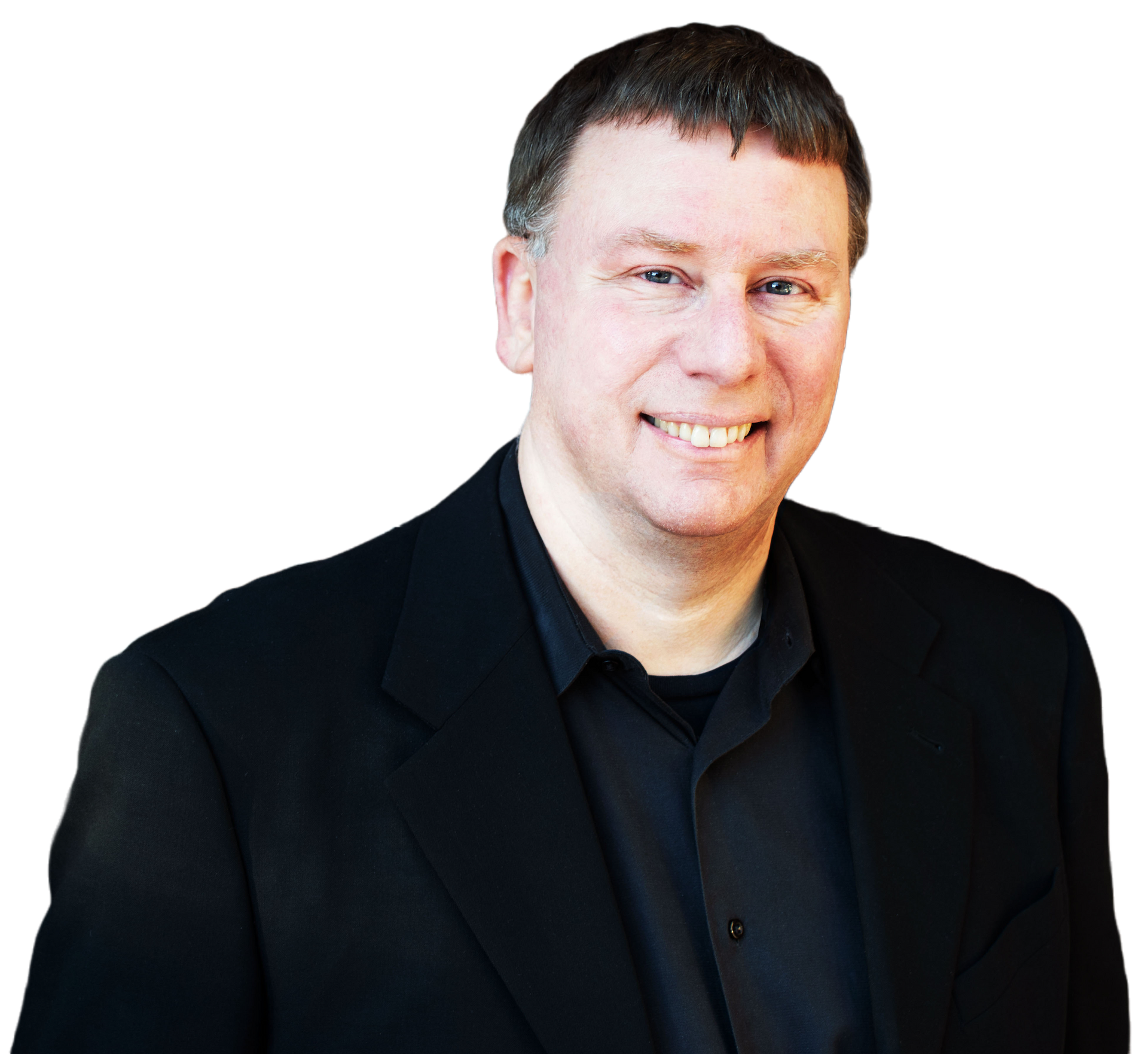
Silent
Silent provides the tools for seekers to recognize their path and enables self-reliance for spiritual and magickal growth.
Seekers gain insight from his work and find their inner calm from his ability to listen and help others reflect.