By Silent
•
September 26, 2026
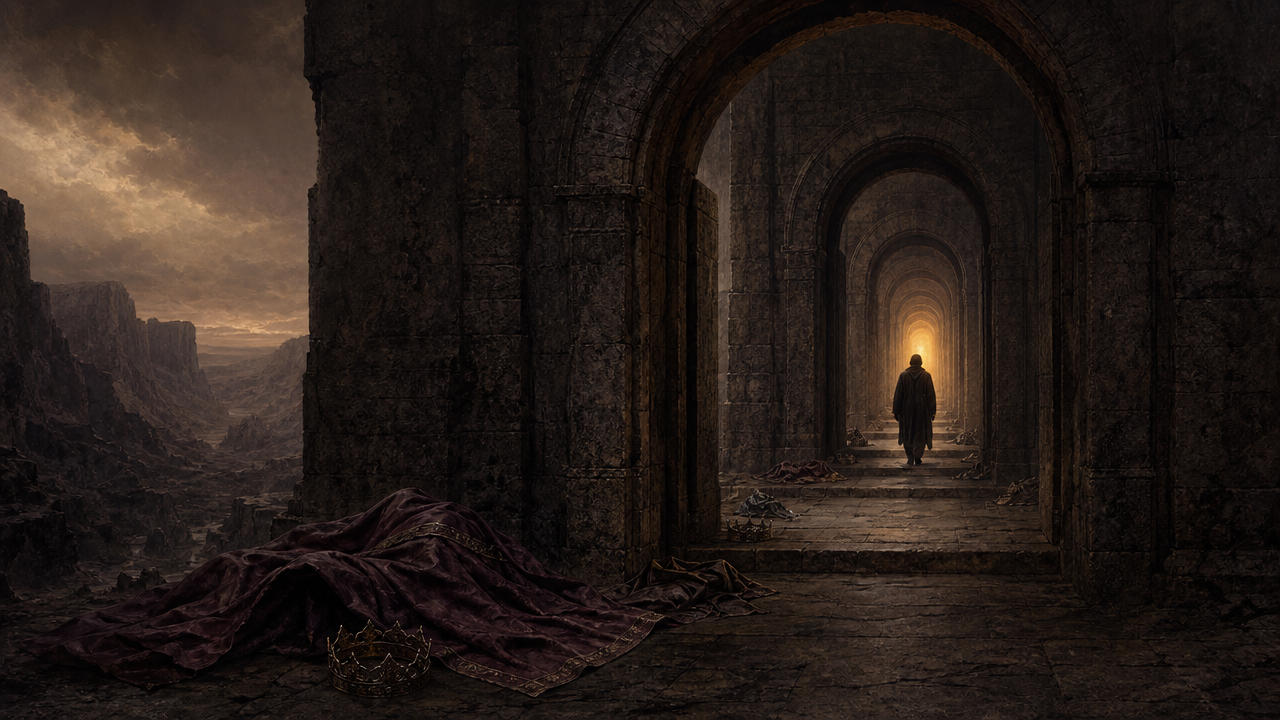
A new study of American religious life shows belief eroding even inside the tradition best known for keeping its people — and asks what's actually left once certainty goes. On September 22nd, Pew Research Center published one of the more quietly startling religion studies of the year, and it isn't about a fringe group or a sect nobody expected to hold together. It's about the Church of Jesus Christ of Latter-day Saints — a faith practically famous for how thoroughly it keeps its own. In 2007, seven in ten Americans raised Mormon still identified as Mormon in adulthood. By 2023–24, that number had fallen to fifty-four percent. Nearly a third of those raised in the faith now describe themselves as atheist, agnostic, or "nothing in particular" — double the share sixteen years earlier. Even among those who stayed, certainty thinned: belief in God "without doubt" dropped from ninety percent to seventy-six, daily prayer from eighty-two to seventy-three. I want to handle this data carefully. It's easy to hear "church retention falls" as bad news for the faithful, or quiet vindication for everyone else. Both readings miss the point. LDS retention, even diminished, still outperforms most American denominations. This isn't a story about one institution losing its grip. It's a story about certainty tested under close to the best conditions available to it — strong community, generational continuity, real doctrinal coherence — and still, gradually, coming apart at the seams. If it can happen there, the architecture holding up anyone's inherited certainty is less permanent than it looks from inside it. What the Study Can't Measure Pew can count who still checks a box on a survey. It can't tell you what it's like to be the one doing the leaving — or the one staying while something you used to feel without effort quietly stops being available to you. That's a different kind of data, and it's the kind spiritual direction actually works with. I've sat across from people in exactly that middle distance: still going through the motions, still loving their community, privately unsure whether anyone is listening. It's one of the loneliest positions a person can occupy, because it often can't be spoken aloud inside the very community that would otherwise hold you. You're not ready to call yourself a leaver. You can't quite call yourself a believer without qualifying it into something smaller. Most traditions have no name for that middle room, so people sit in it alone, assuming they're the only one there. They rarely are. The Pew numbers say so. The Gate You Can't Skip There's an old Sumerian story about Inanna, Queen of Heaven, who descends into the underworld to see her sister Ereshkigal. At each of seven gates, the gatekeeper takes something from her — her crown, her jewelry, her royal robes — until she arrives at the bottom stripped of every marker that told anyone, including herself, who she was. Only then does she meet what's actually down there. The myth doesn't treat this as tragedy. It treats it as the price of admission to a truth the ornaments were never built to survive. Deconstruction, in the modern sense, usually doesn't announce itself as myth. It shows up as a nagging doubt during a hymn, a question you stop asking out loud, a certainty that used to arrive automatically and now has to be manufactured. But it follows the same shape as Inanna's descent: something is removed at every threshold, and there's no route past the gate that lets you keep all your jewelry. The theology goes first, sometimes. Then the community. Then, for some, the habit of feeling addressed by anything larger than themselves. I'm not going to rush in here and repair anyone's faith, and I'd be suspicious of anything that claimed it could. Some absences aren't problems waiting on a solution. The silence where God used to answer immediately isn't necessarily a malfunction — it may be the actual terrain, and the task is learning to stand in it rather than paper over it with a faster answer. The Question Worth Sitting With So here's what I'd actually ask, if you were sitting across from me instead of reading this: if the certainty you were handed finished eroding completely — not into a different, tidier belief, not into an argument you could win, but into open silence — could you survive being someone who simply doesn't know? Not forever. Just for now, while it's true. I won't answer that for you. I don't think it can be answered from outside the room it happens in. A Practice for the Middle Room If you recognize yourself here — still present, quietly uncertain — try this before the week is out. Write one sentence naming exactly what you used to believe without effort. Then write, honestly, whether that sentence is still true for you, true with an asterisk, or no longer true at all. Don't fix it. Don't defend it to an imagined critic. Just let it sit there, accurate, on the page. That's the whole practice. It won't resolve anything tonight. It will at least stop costing you the extra work of pretending, even to yourself, that nothing has moved. Closing Reflection Nearly a third of a generation raised inside one of America's most cohesive faiths now names no faith at all. Whatever tradition raised you, ask honestly: which of your certainties are still yours, and which have you simply kept saying out of habit? Sit with the answer before you try to fix it.