Crafting Your Magickal Journal
Silent • January 2, 2023

Magick is a sacred science.

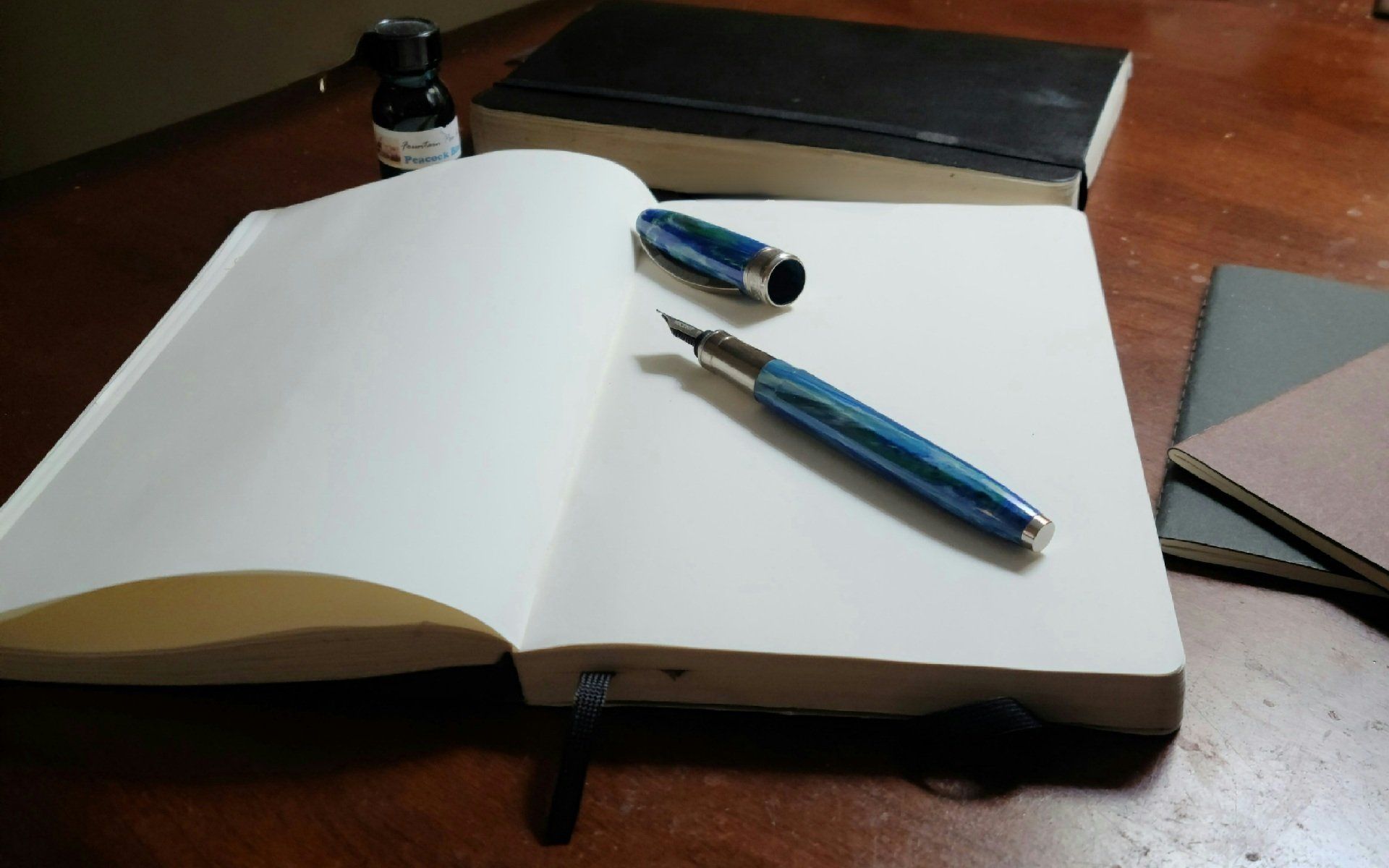
Journaling is one of my favorite topics. It is both a qualitative and quantitative tool for expressing thoughts, for reflection and for precise, detailed records. Typically, I carry two to three journals, one for daily work and personal administration. Another is a personal journal/diary, and one is a handwritten prayer book. There are several more for language study, herbalism, and other fields of interest. All journals have blank pages for writing and an easier time with drawings.


Creating detailed records is an essential part of the scientific method. Common wisdom might say that scientific methods and occultism are at odds. In reality, practicing occultists know that magick is a sacred science. And in science, the first rule is that all experiments must be reproducible.


Reproducibility is the ability of independent third parties to obtain the same conclusions from a set of steps or an experiment. This applies to physics, cooking, magickal workings, and other processes that follow natural law. It does not mean the outcome is identical. It does mean that if you use a telescope to look at a distant object, you see that object magnified by the power of the lenses you use. Lenses of different focal lengths and sizes will provide greater or less magnification, but the view of the object will be enhanced. While you may never share your magickal journal with another, it helps you reproduce the types of results and enables you to build on the foundations of your workings. The way to share those steps is through rigorous documentation of your work. The place to do it is in a journal.

The Journal


The journal itself may be simple or elaborate. You can use anything from sheets of paper to grade school notebooks to elaborately bound handmade paper diaries. Any writing instrument will do as well. I suggest a pen that provides clear lines. You can always create or embellish pages with images using a variety of colors, markers, and other writing instruments. My everyday writing instrument is a fountain pen which I’ve used for the last 20 years.


For you, as the occultist, you need a magickal record. To do that, here are suggestions for building your magickal journal. Following the experiments requires clear, concise, and complete documents. That record is for you to reflect and understand the work you do. However, a journal is more than just a recording. It allows you to capture all of the factors of your work. So we’ll create a series of prompts to help you remember the environment, your mood, the steps of the experiment, and everything that went into it.


Your journal may be as straightforward or as elaborate as you like. My recommendation is for you to use a paper journal. Writing enhancement memory and, like any other craft practice, encourages you to take more than you might with an electronic one. As a lifelong technologist, I love my gadgets and have copious electronic records. I choose to write rather than type because it allows me to be more expressive. However, don’t let that prevent you from using something that works for you. Electronic records are searchable; you can have both.


Your journal is separate from your BOS (Book of Shadows) or spell book you have acquired. Think of the magickal experience as an exercise in dining if your BOS or grimoire is the recipe book. The ritual or ceremony is the menu, the steps, and the spells that you put your magickal recipes into practice. The magickal journal is your Yelp review. 😊


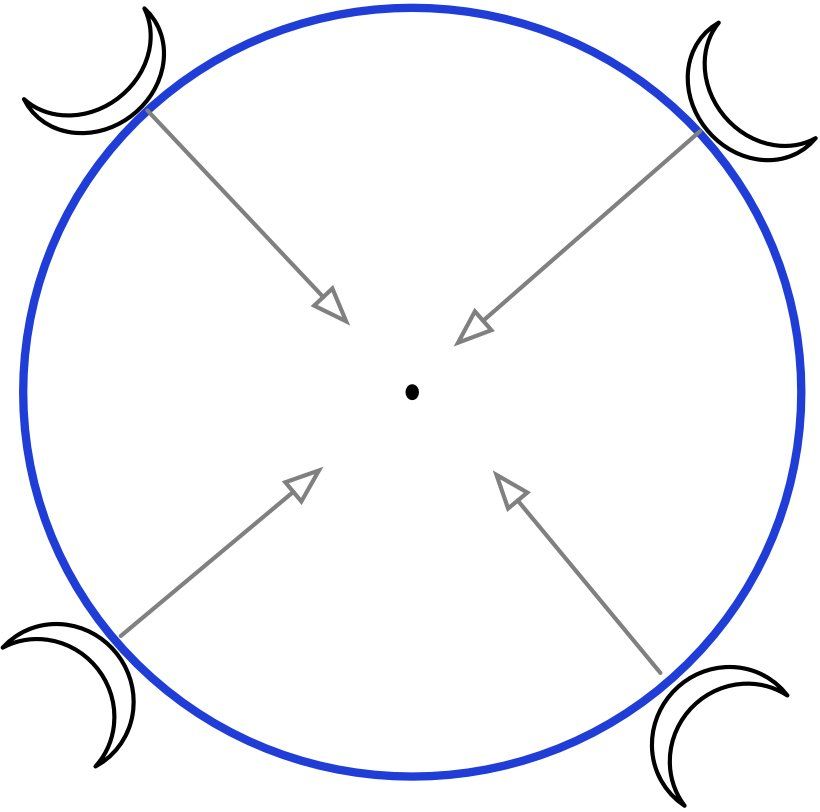
I've included a sigil for your journal. It will provide focus and clarity of your writing.


What should you journal?


Everything. Write it all down and do it as soon as practical. Don’t stop a ritual from making your observations but don’t wait several hours either. No one has a perfect memory. A record of what you did, taken as soon as possible, will help you remember.


Details, details, details.


  • I used dirt from City Park, New Orleans, gifted by a 600-year-old tree.


versus


  • I used dirt from around an old tree.

Prompts


Journaling prompts to help you remember what to record about the events—Cherry-pick amongst these prompts. Be practical about how much detail is required. For example, your daily tarot pull doesn’t require a three-page write-up with astrological positions and the number of times you shuffled. On the other hand, dark-moon scrying, where you wait until your birthday month, merits more detail.


  1. What was your intention going into the ritual or ceremony?
  2. What were the date and time?
  3. What were the steps?
  4. Number them and leave enough spacing for you to make corrections, comments, or changes in the future.
  5. Approximately how long did you take with each step?
  6. Take the time to write out any elaborate gestures, mudras, or Golden Dawn calisthenics (“I performed a banishing” vs. “I performed the Lesser Banishing Ritual of the Pentagram”). Then, future, you will thank yourself because you didn’t write down the time, but you recorded that you performed Resh facing south. Hint that tells you what time you did the ritual.  
  7. Did you use tools such as a scrying bowl, book, crystals, tarot cards, or a wand?
  8. Did you cleanse them or do anything significant?
  9. What were the ingredients?
  10. Did you acquire something special such as stormwater gathered under the light of a full moon?
  11. How much of each did you use? If you are making incense, precision is critical, along with the detailed steps.
  12. The environmental conditions
  13. What time of day?
  14. Was the room lit by natural light, candles, or perhaps wholly dark?
  15. Was there background noise or sound?
  16. What was the weather like?
  17. Did you make a note of the astrological conditions? Dark moon, Jupiter ascending?
  18. Was anyone with you or nearby?
  19. Furbaby or familiar? Note that these are not the same thing. I’ll write a different article about familiars.
  20. What was your physical and emotional state?   
  21. Any strong emotions?
  22. Did you meditate or put yourself into a trance?
  23. Did you make a point to ground and center?
  24. Did the weather affect you? Were you too hot or cold?
  25. How did you feel physically? Were you sick? Full or hungry? Tired?
  26. Did you do any ritual cleansing?
  27. Did you notice any effects?
  28. If you were scrying, what did you see? It helps say out loud anything you might have seen. This help with memory retention. This is a very effective technique for dream journaling. Always keep a notepad and pen by your bed.
  29. Nothing still merits a notation. The effects might not be noticed until later.
  30. Did you do a banishing?
  31. Please clear the space after any significant ritual. If you did an evocation, invocation, or build-up of energies, release them. Release the quarters. Please.
  32. How did you feel during and afterward?
  33. The scientific method is crucial, and your feelings are equally valid. Be brutally honest about how you felt. There were lessons learned, good, bad, or otherwise.
  34. Leave some room at the end of the entry. There may be events you recall or that happen later that you’ll want to note.


If you enjoyed this article, please thank me by subscribing to my Instagram and leaving a comment.


ABOUT THE AUTHOR


Silent


Silent provides the tools for seekers to recognize their path and enables self-reliance for spiritual and magickal growth. 


Seekers gain insight from his work and find their inner calm from his ability to listen and help others reflect.

By Silent May 28, 2026
For the Pagan and Contemplative Community
By Silent May 27, 2026
There is a grief that arrives before the death. It does not announce itself. It does not have a name that anyone uses at the dinner table, or in the waiting room, or in the parking lot of the care facility where you sit in your car for a few minutes before going in, gathering yourself. It lives in small moments. The first time they didn't recognize you. The day you realized you were making decisions for them that they would have hated. The night you caught yourself hoping — just for a second, just once — that it would be over soon, and then spent the next three days punishing yourself for the thought. This is called anticipatory grief. And it is real, and it is heavy, and almost no one will name it for you while you are living inside it, because you are the strong one, and the person you are losing is still here, and grief, we have been told, comes after. It doesn't always come after. Sometimes it comes alongside. Caregiving is one of the most demanding things a human being can do. It asks you to be present to someone else's diminishment, day after day, while managing your own fear and your own exhaustion and your own sadness — and while the world around you continues as though nothing unusual is happening. You go to the grocery store. You answer emails. You show up. You are praised for your strength, which is a kindness people offer because they don't know what else to give you. What you actually need is someone who will let you put the strength down for an hour. Not fix you. Not give you a plan. Not tell you that you're doing a great job, or that they couldn't do what you're doing, or that everything happens for a reason. Just someone who will sit with you in the weight of it. Who will not be frightened by what you are carrying. Who will let you say the unsayable things — the anger, the ambivalence, the love that is so tangled up with loss that you can no longer tell them apart. That is what I offer. I am a death doula and spiritual director. I work with caregivers who are in the middle of it — not at the end, not after, but now, in the long middle stretch where the grief has no official start date and the world has not yet given you permission to feel it. We meet, usually by video, for an hour at a time. I listen in a particular way — not for problems to solve, but for what is actually present beneath the exhaustion and the competence and the careful management of everyone else's emotions. You do not have to have it together when you come into this space. That is the point of it. A few things I will not do: I will not tell you how to grieve correctly. There is no correctly. I will not rush you toward acceptance or silver linings. Some things do not have silver linings, and pretending otherwise is a small violence. I will not give you more to manage. You are already managing too much. What I will do is be present — fully, unhurriedly, without an agenda — for whatever you bring into the room. If you are a caregiver and you are reading this and something in you recognized itself in these words, that recognition is an invitation.  I have a small number of spaces available for caregivers who are navigating the approach of death alongside someone they love. The intake questions at tokeepsilent.me are where we begin. Or you can reach me directly. There is no script for this conversation. We simply start. — Silent
By Silent May 24, 2026
You have prepared for everything. The board presentation. The acquisition. The restructuring conversation you had to have with someone you respected. The market downturn you saw coming and the one you didn’t. You have sat in rooms where the stakes were real and kept your composure, and you have learned — through repetition and cost — how to carry weight without showing it. You have not prepared for this. No one does. Not really. The death of a parent, a spouse, a peer your own age. A diagnosis with a timeline attached. The slow, grinding recognition that someone you love is leaving — not suddenly, but in increments, and there is nothing to negotiate, no alternative proposal to bring to the table, no strategic pivot available. This is not a problem to be solved. It is a threshold to be crossed. And most people cross it alone, or nearly so — surrounded by well-meaning people who don’t know what to say, medical professionals focused on the body, and a culture that has made death so invisible that we have lost the language for it entirely. I am a death doula. That phrase means different things in different contexts. In mine, it means this: I sit with people who are navigating the approach of death — their own or someone they love — and I offer skilled, unhurried companionship for the crossing. Not therapy. Not hospice care. Not grief counseling, though grief is present in every conversation. What I offer is something older than all of those things. It is the human practice of bearing witness — of being present without flinching, without fixing, without rushing anyone toward a resolution they are not ready for. I work with a small number of people at a time, by referral and by invitation. My clients are often high-functioning, highly capable people who have spent their professional lives solving problems and have arrived at the one thing that will not be solved. They need someone who will not be undone by its weight. Someone who has sat with death before and is not afraid of it. That is what I am. The work looks different for each person. Sometimes it is sitting with a CEO whose mother is in hospice and who has not yet cried — not because he doesn’t feel it, but because he doesn’t know how to begin, and the people around him need him to be okay. We create a space where he does not have to be okay. That is the whole of it. Sometimes it is working with a woman who received a diagnosis six months ago and has been managing everyone else’s feelings about it ever since. We turn that around. For one hour, no one else’s feelings matter. Only hers. Sometimes it is a caregiver — a spouse, an adult child — who is exhausted in a way that sleep does not fix, carrying a grief that has not been permitted to be grief yet because the person they are losing is still here. We name that. We sit with it. We find language for what has no name. Sometimes it is preparation for the dying person themselves, or for those who will remain. What needs to be said. What needs to be forgiven? What can be laid down before the end, and what must be carried. Death is not the enemy of a good life. It is its completion. But we have forgotten how to treat it that way. We have medicalized it, hidden it, rushed past it, outsourced it entirely. And so when it arrives — as it always does — we find ourselves without a map, without a guide, without the language for what we are experiencing. You do not have to cross this threshold without accompaniment. If you are navigating the approach of death — your own or someone you love — and you are looking for skilled, unhurried companionship, I have a small number of spaces available. Begin with the intake questions at tokeepsilent.me , or simply reach out directly. There is no wrong way to begin this conversation.  — Silent
Show More